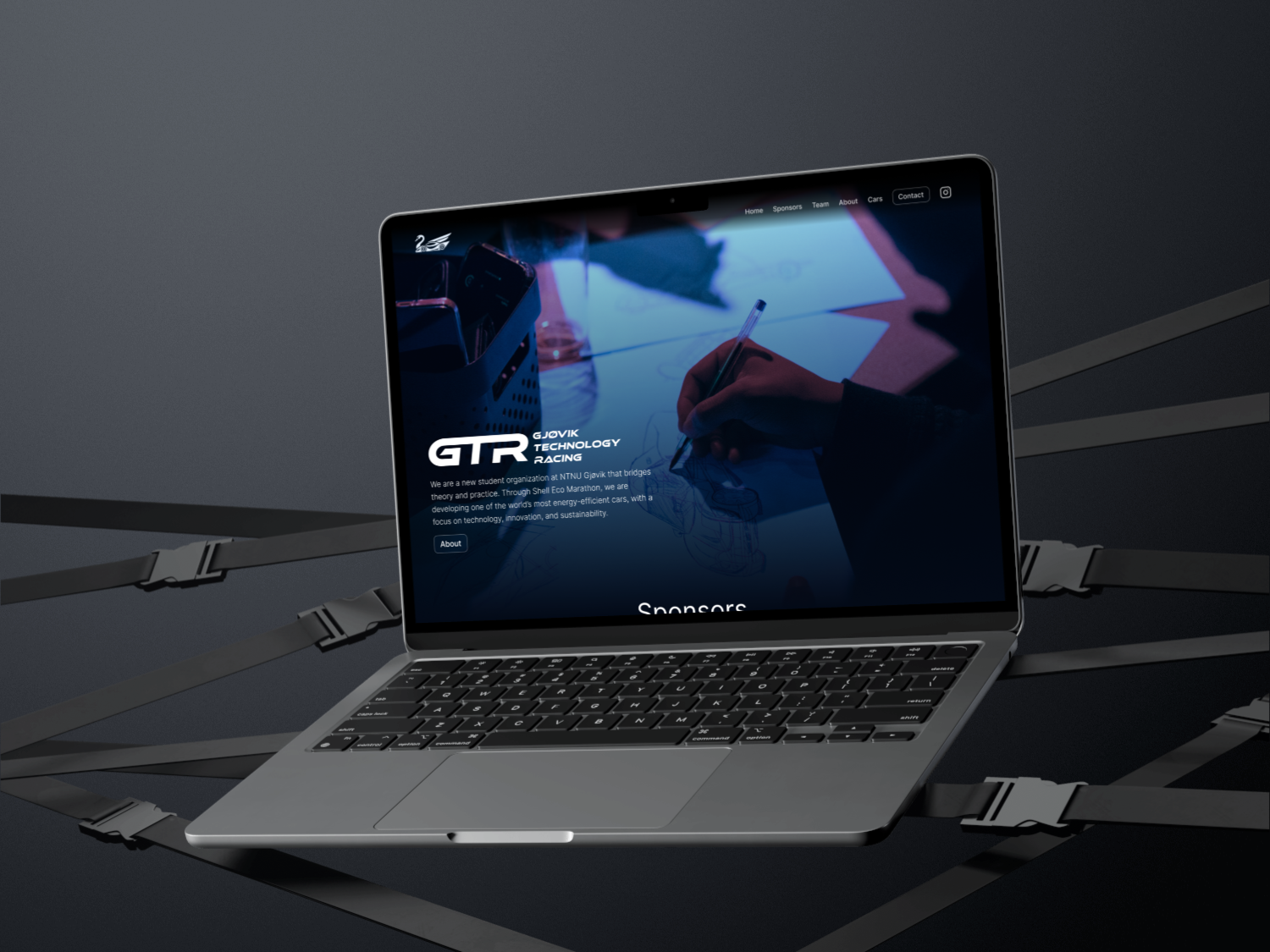
Gjøvik Technology Racing (GTR) is a student organization at NTNU Gjøvik dedicated to designing and building an energy-efficient electric car for the Shell Eco-Marathon 2026.
As the first technical team on campus, we bring together students from different fields to gain hands-on experience, collaborate across disciplines, and promote innovation and sustainability through real engineering challenges.
During the design prosess we worked with other teams at different NTNU campuses and spent a lot of time researching different racing teams to look for inspiration. With a design and development team of almost 20 people we have had to work in different situations with all kinds of people creating a complex and well thought out design.
The project is still ongoing and will be the foundation for future GTR teams website over the next years.
https://gjoviktech.no
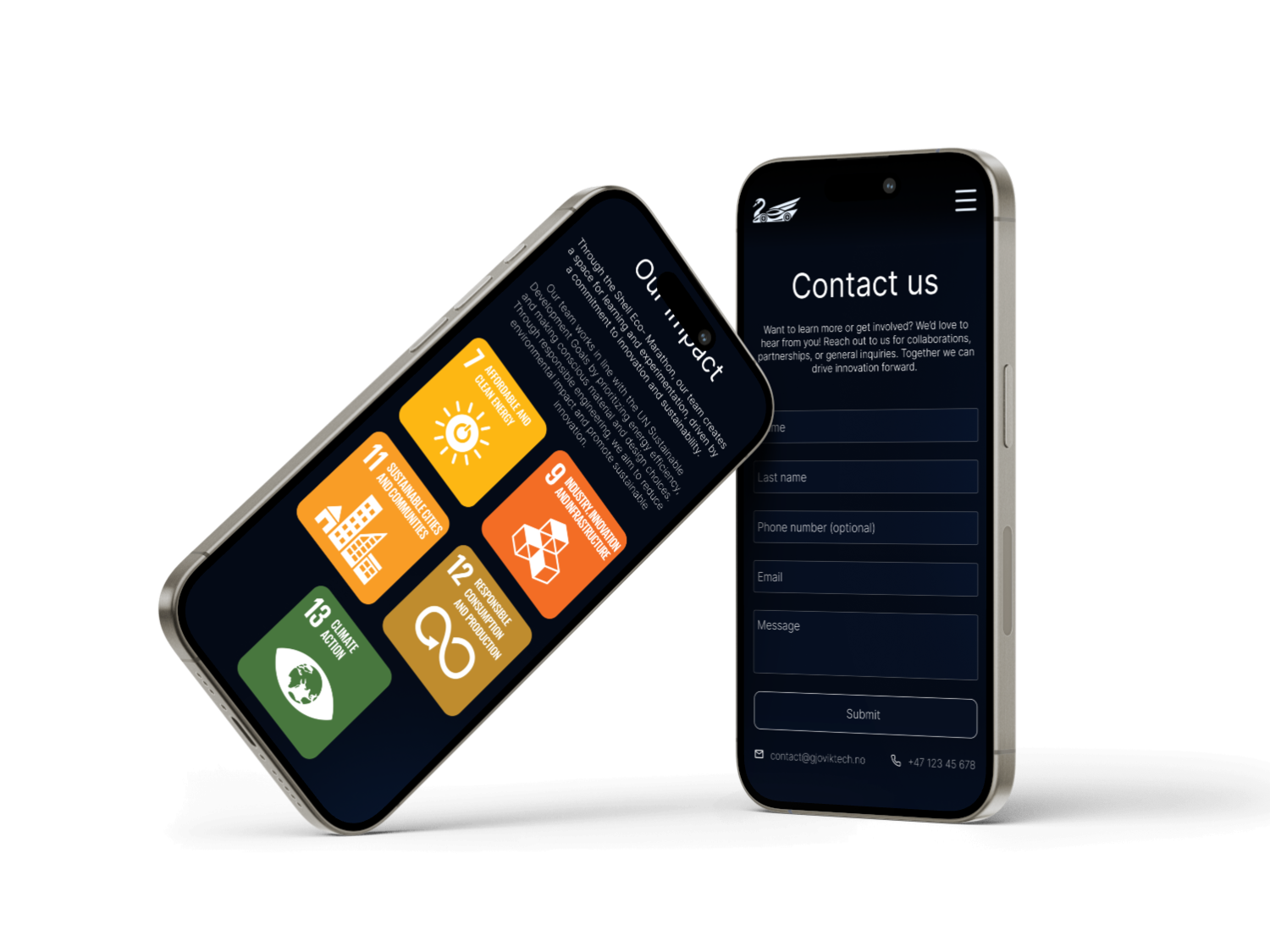
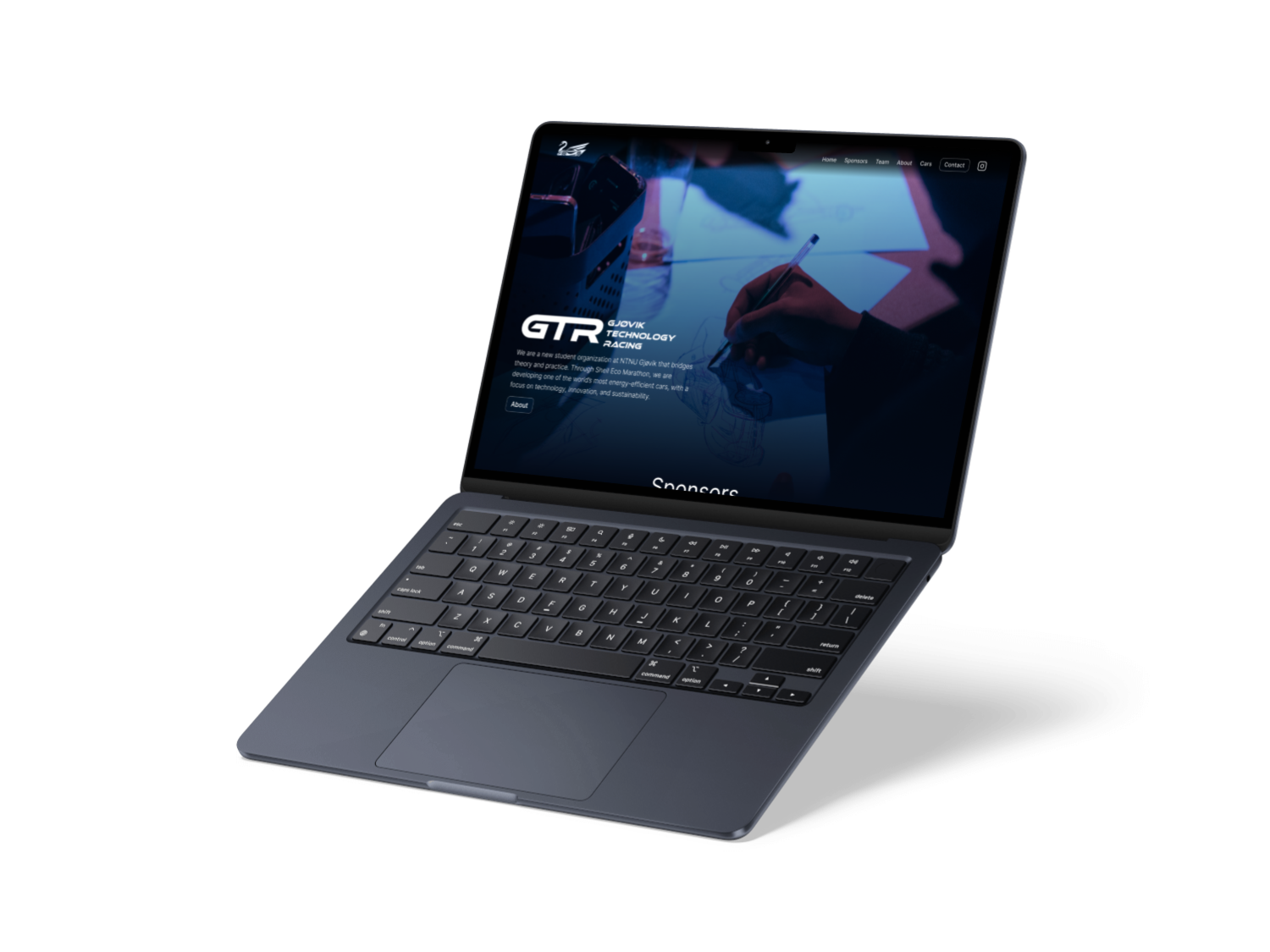
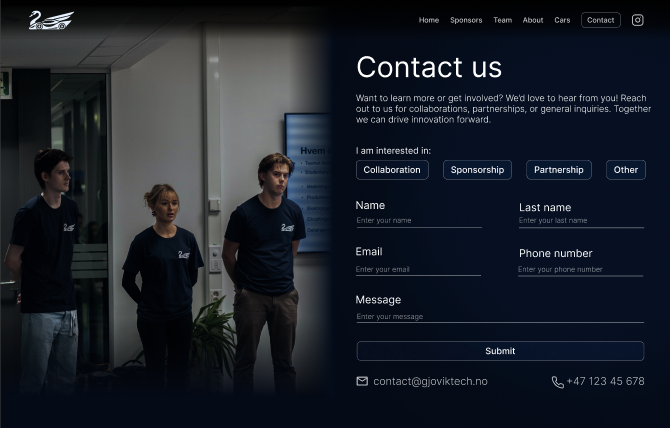
Early attempts at a contact form
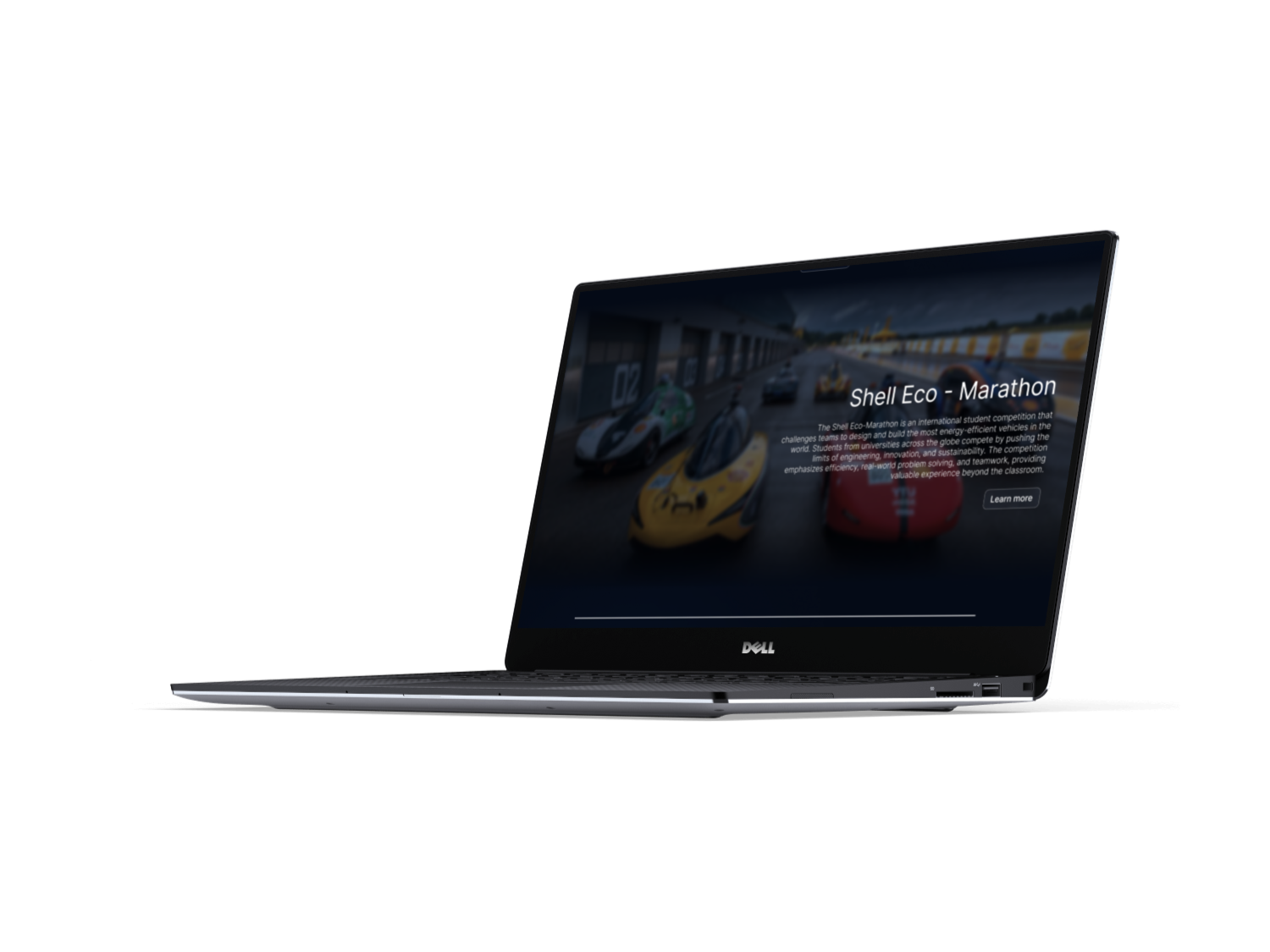
The preparatory phase of the Gjøvik Tech Racing website focused a lot on structured UX groundwork before any visual design was finalized. The process began with an intense research phase into comparable racing teams, student engineering organizations, and motorsport related websites to understand common content structures, how to handel sponsor presentation, and the competitions communication requirements. This benchmarking helped define both functional needs and credibility.
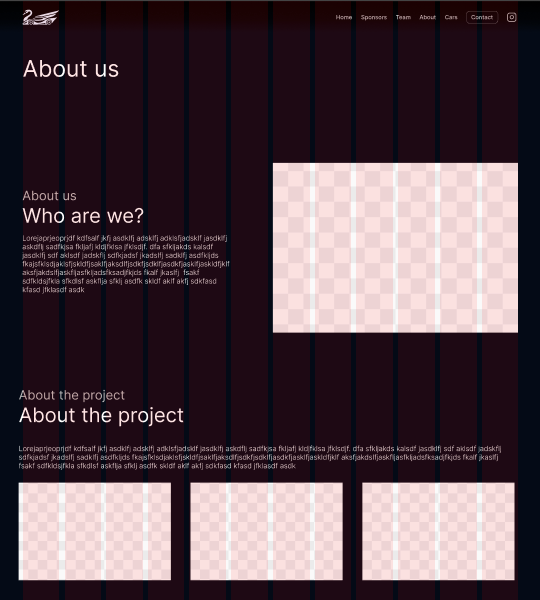
One of many design iterations of the about us page
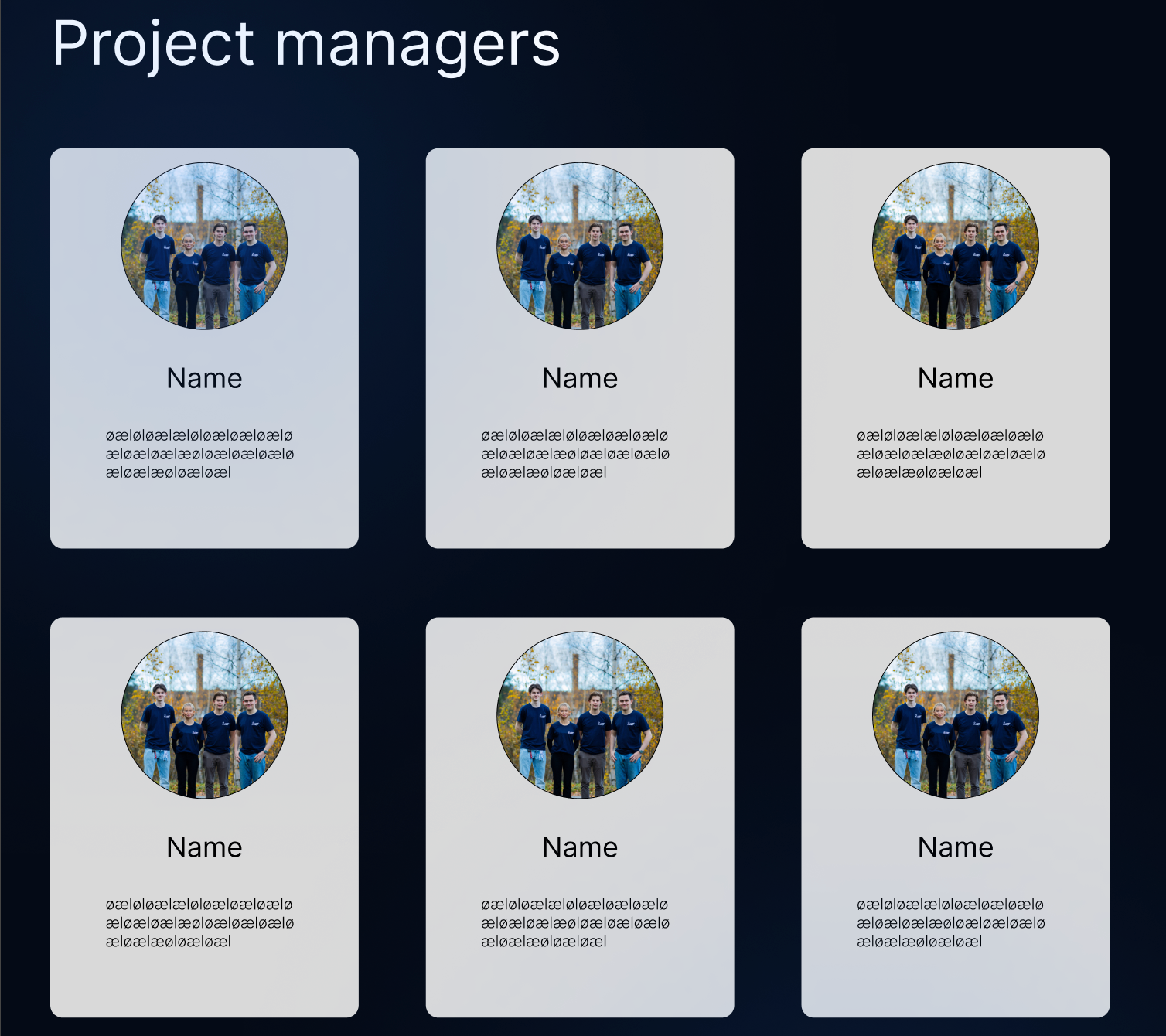
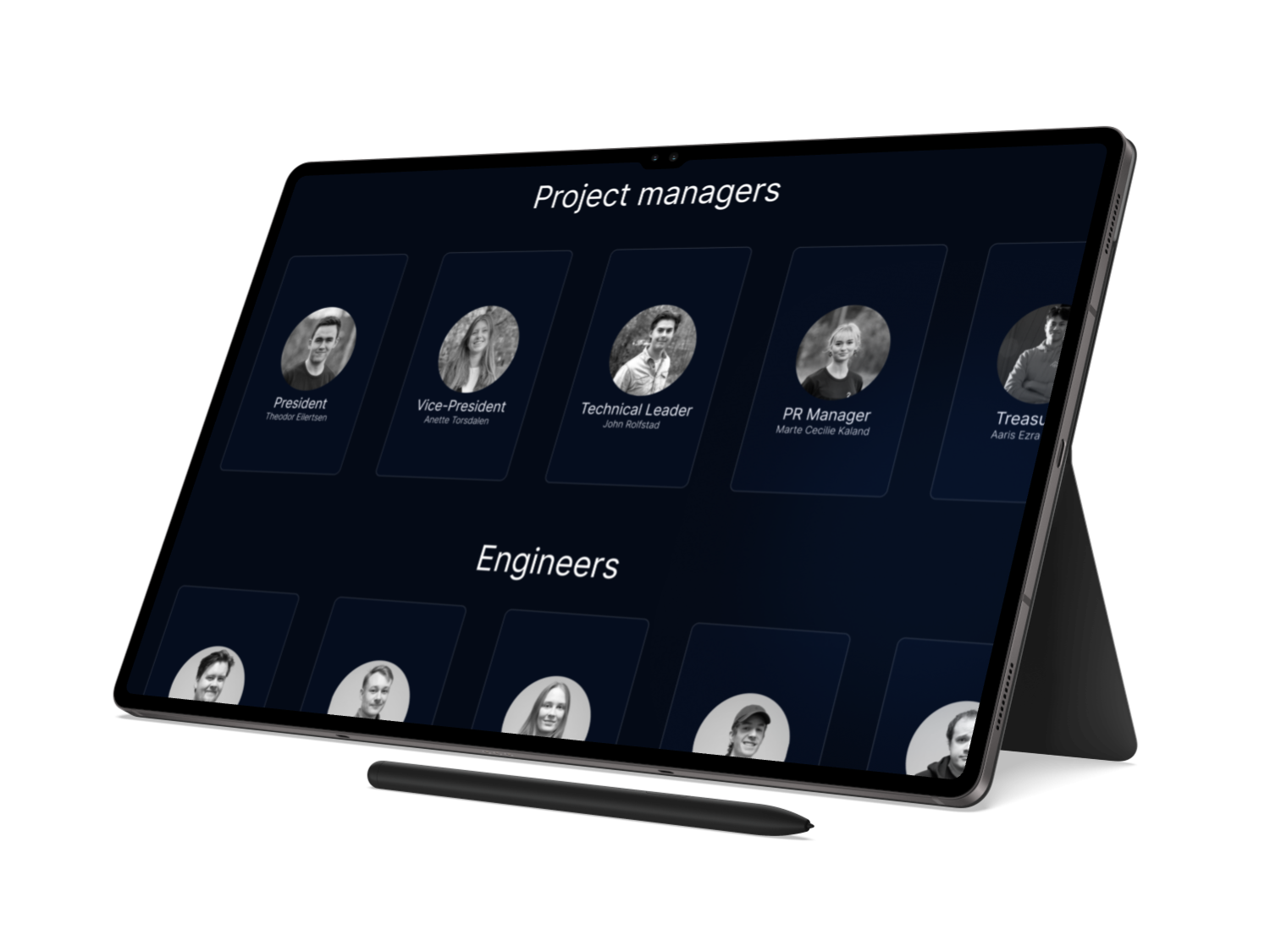
An early design idea for a way to present our project managers
Early exploration was done through hand sketches and low-fidelity layout drafts. These were used to quickly test different information hierarchies, navigation models, and landing page concepts without committing to visual styling. The goal at this stage was to clarify structure, ensuring that team identity, technical credibility, sponsor exposure, and recruitment information were easy to access and logically organized.
The sketch phase was followed by wireframing of core pages and user flows. Special attention was given to sponsor placement, logo handling, and visibility rules to align with the guidelines from competition and partnerships.
This iterative pre-design process ensured that the final direction was grounded in tested structure, stakeholder requirements, and competition-level communication standards rather than purely visual preference.