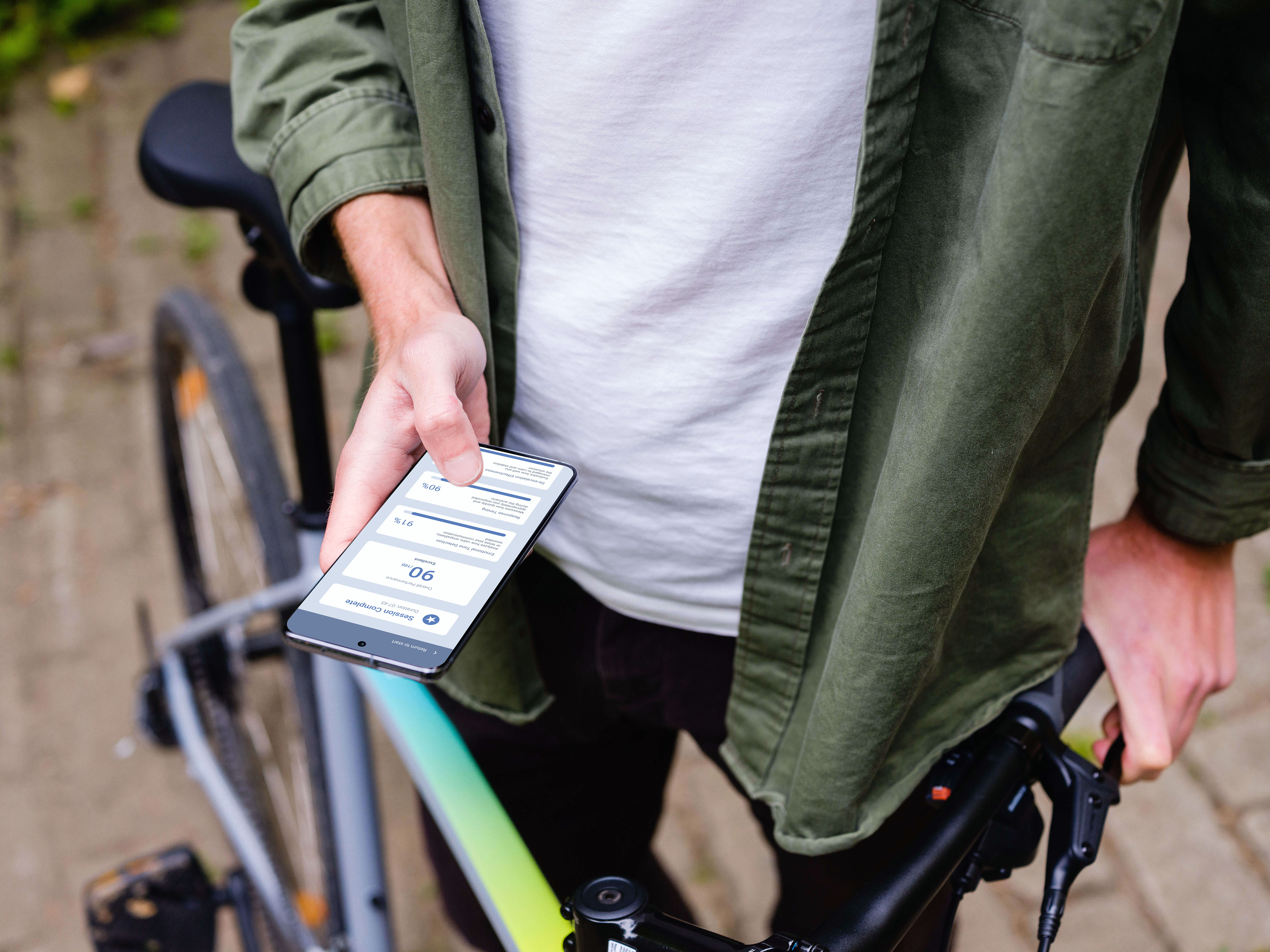
We developed a concept for a mobile AR-based patient simulation designed to give healthcare workers flexible, scenario-based training in mental health care. The solution combines natural interaction through microphone or keyboard input with a simple interface for selecting different virtual patients, developed in collaboration with SIM Innlandet.
The simulation displays dynamic vital signs such as heart rate and respiratory rate in AR, allowing users to practice communication, situational awareness, and clinical assessment skills. The goal is to make professional training accessible anywhere, without the need for traditional simulation equipment.
The project demonstrates how AR, user-centered design, and healthcare domain insight can be combined to create more accessible and effective learning experiences.
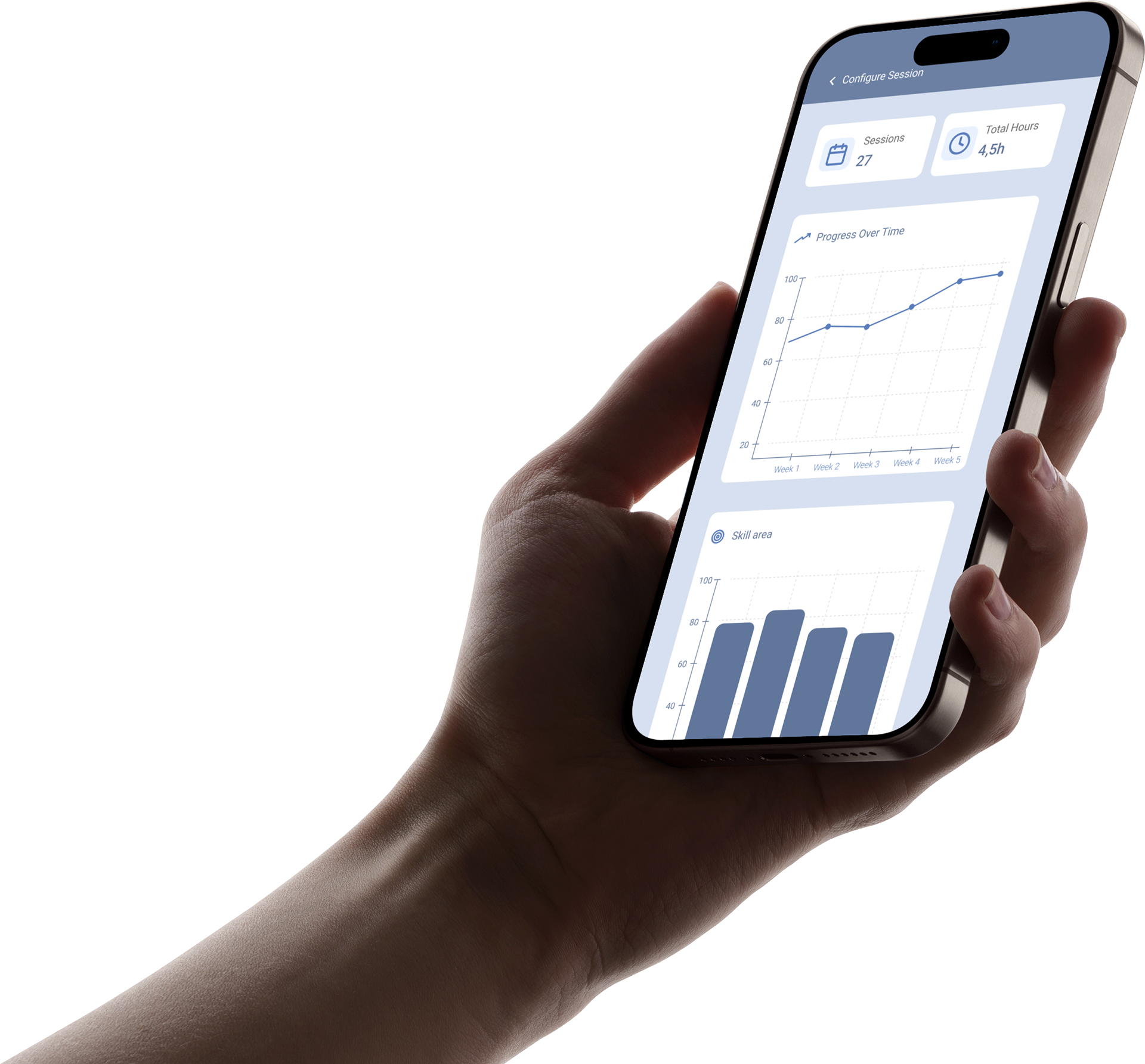
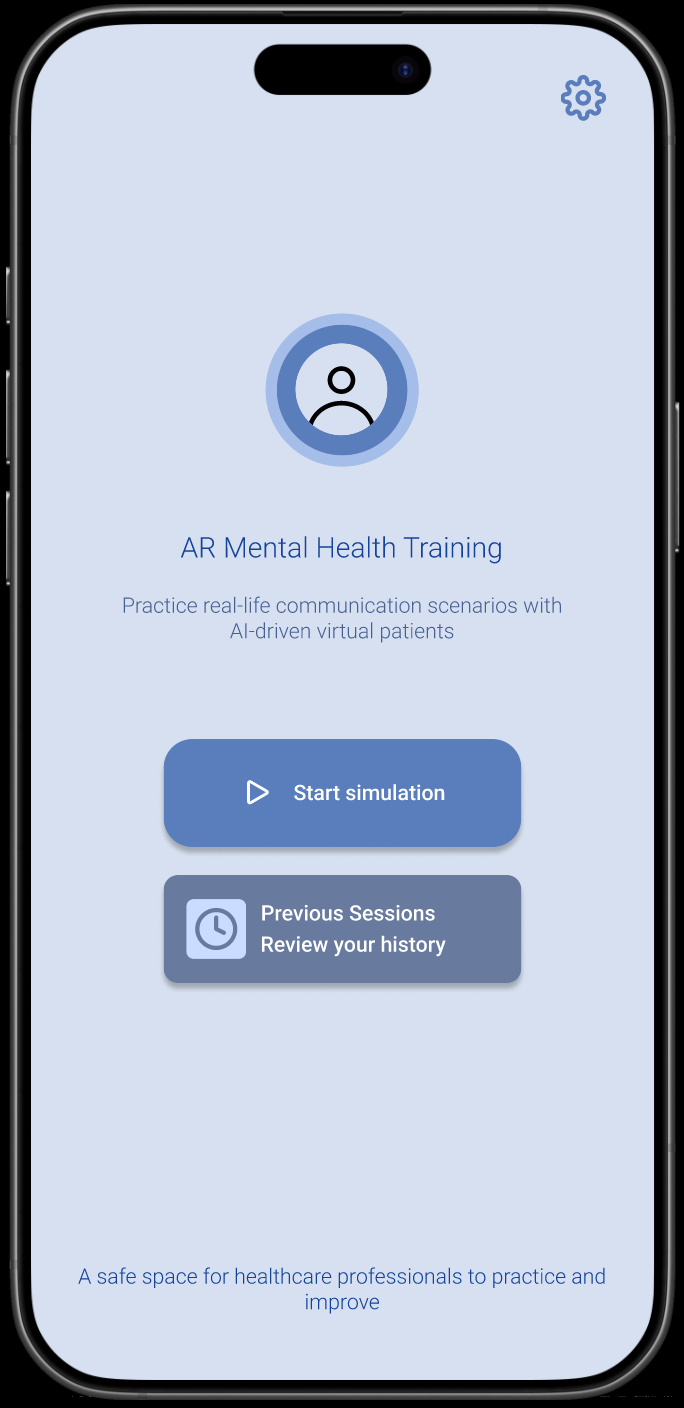
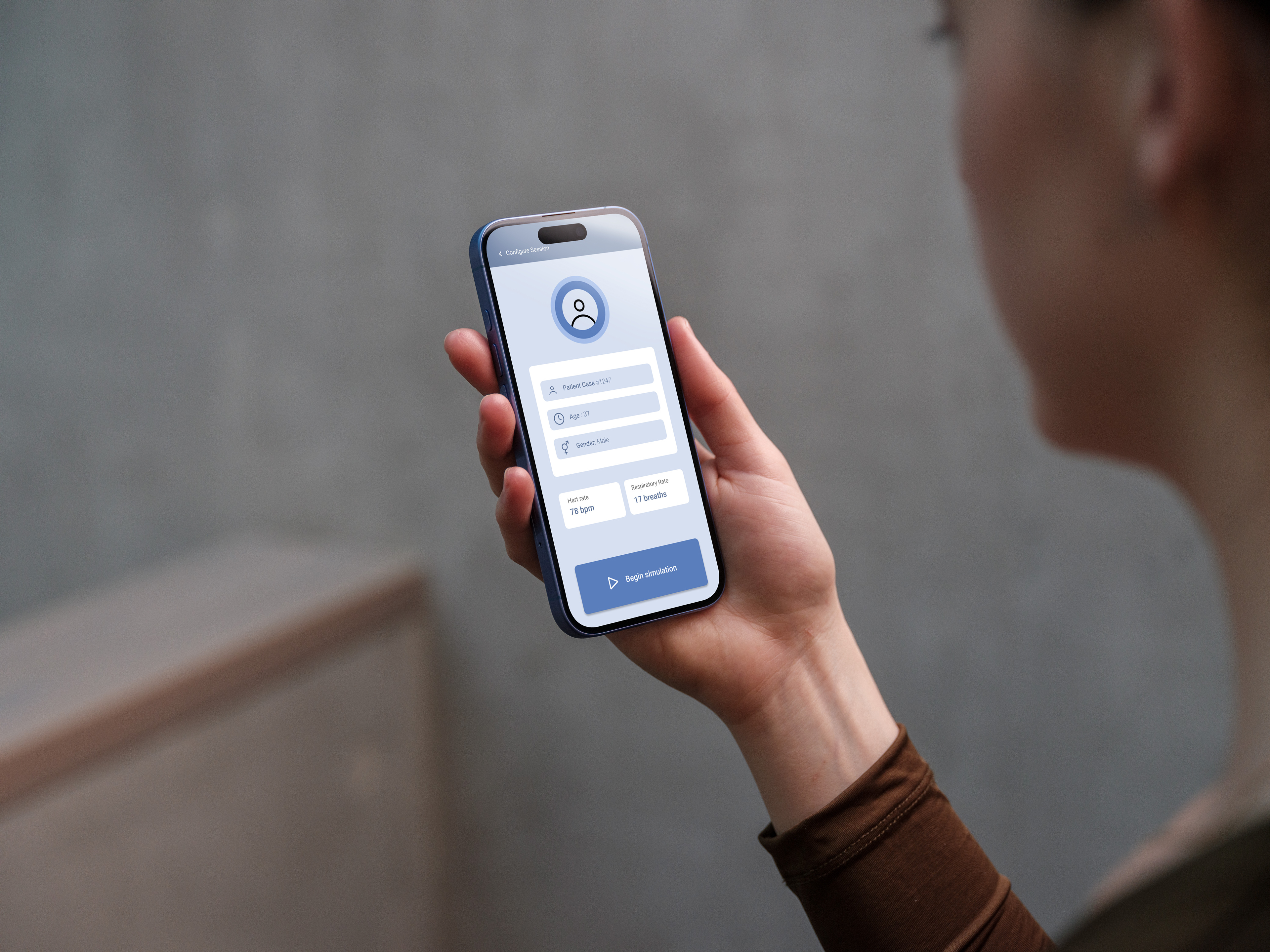
The design process started with early discovery work and dialogue with domain partners at SIM Innlandet to understand training needs, learning goals, and practical constraints. Based on this insight, we defined key scenarios within mental health care and translated them into concrete user flows and interaction requirements.
We explored concepts through quick sketches and low-fidelity wireframes to map out core functionality, patient selection, and AR information layers such as vital signs. These drafts were iterated through internal reviews, focusing on clarity and natural interaction via voice or text input.
Next, we developed interactive prototypes and tested scenario flow, interface simplicity, and feedback systems. Iterations focused on reducing confusion, improving information hierarchy, and ensuring the simulation supported both communication training and clinical decision making.